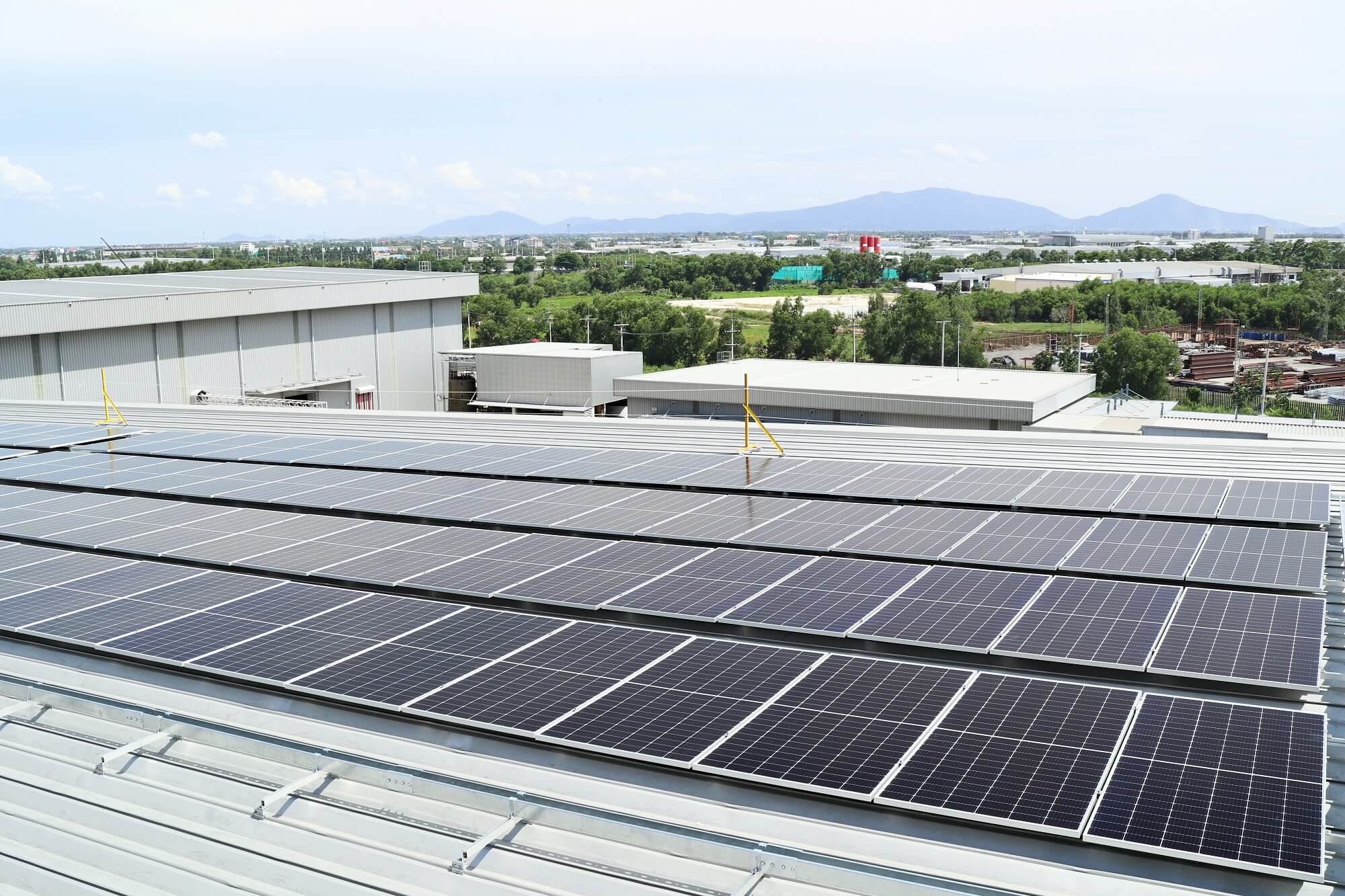
Making solar work for your business
The instinctive question is how many solar panels a roof can take. The right question is how much of what the system generates the business will actually use. That distinction is where the return on a solar investment is won or lost.
Demand for solar-powered electricity is soaring. Falling installation costs, generous government supports and mounting pressure to decarbonise have made rooftop PV one of the most visible energy decisions an Irish business can make. It’s tangible and noticeable and it sends a clear signal to customers and stakeholders that a business is serious about its energy future.
However, visibility isn’t the same as value. One of the most common mistakes we see businesses make is starting from the wrong question. The instinctive question is ‘how big a system can the roof take?’ The question that protects the investment is ‘how much of what we generate will we use?’
Orientation matters as much as system size. A south-facing array will generally generate the greatest annual output, but an east-west configuration can often be a better commercial fit by spreading generation across more of the working day. When combined with a detailed analysis of site demand, panel orientation can be used to improve self-consumption and reduce reliance on lower-value exports.
Why the right sequence matters
Official guidance for businesses from the Sustainable Energy Authority of Ireland (SEAI) recommends the following sequence: reduce end-use energy demand first, supply the remaining demand as efficiently as possible, and only then bring in renewable generation such as solar PV. Installing solar before improving a building’s overall energy efficiency risks installing more capacity than the business needs, which directly impacts the payback period for the investment cost.
The reason this matters is mostly about how solar economics work. A unit of solar electricity used on-site displaces a unit that would otherwise be purchased from the grid at the retail rate.[KJ1] A unit exported earns a fraction of that.
That gap - and how to assess what self-consumption rate a business should realistically target - is explored in the second part of this series. For now, the key point is that when you push a system past what the business uses during generation hours then each additional solar panel earns less than the one before it.
Demand has a shape, not just a size
Solar generation follows a predictable midday curve and for most businesses their electricity demand doesn’t follow the same ‘shape’. A business that opens early and runs heavy equipment before the sun is shining will use little of its own generation in the first hours of the working day. And a business with peak electricity consumption in the late afternoon or evening misses the best of the solar curve entirely. By contrast, a cold storage or manufacturing site running a steady load around the clock tends to be a strong fit for solar because its demand sits comfortably under the generation curve for most of the day.
A properly specified solar PV design starts with actual consumption data, ideally a full year of half-hourly readings, set against a modelled generation profile for the specific site. That overlay, not the roof area, is what determines the size at which self-consumption stays high and low-value exported energy stays low.
Why the audit has to come first
Before any conversation about the size of solar PV system, an audit identifies electricity consumption that can be scaled back. The audit will examine equipment running outside operating hours, HVAC systems working against each other, and lighting left on longer than necessary. Strip that waste out first and the demand figure a solar system is sized against is more realistic. Skip that step and the business risks specifying a system against an inflated baseline, paying for capacity it doesn’t need and will spend years exporting at a loss.
Sizing is only half the story. A well-designed, correctly sized system will consistently outperform an oversized but poorly specified one. The decisions that separate the two are factors such as inverter sizing, string layout and shading mitigation, the granularity of monitoring, and realistic access for maintenance.
Solar PV is one of the most effective tools available to businesses managing energy costs and decarbonisation commitments. For the optimum return on investment, it is imperative to fully understand demand, reduce avoidable waste, and then size generation against what the business uses rather than how many solar panels the building roof can accommodate.
Part 2 of this series looks at the economics of self-consumption - how to assess daytime demand, what self-consumption rates to target, and how load-shifting and battery storage can extend the value of a well-sized system.