-(3).png?width=1200&height=500&ext=.png)
The Small Business Owner’s Energy Transition Roadmap
Recent research shows that SMEs are increasingly moving beyond good intentions and embedding carbon reduction into the fabric of how they operate. The most visible shift is towards electrification and renewable energy, with growing investment in solar panels and electric vehicles seen as practical steps rather than aspirational gestures.
One way for a business to manage their energy transition is to adopt an energy roadmap. An energy roadmap is a framework for running a more sustainable and responsible business and for many SMEs the most immediate gains are found in how they manage their energy. Energia have provided an energy roadmap to guide SMEs through their energy transition.
Whether you operate in manufacturing, pharmaceutical, hospitality, leisure, or retail, Energia can work with you to identify opportunities for energy conservation and provide both guidance and funding to help realise them.
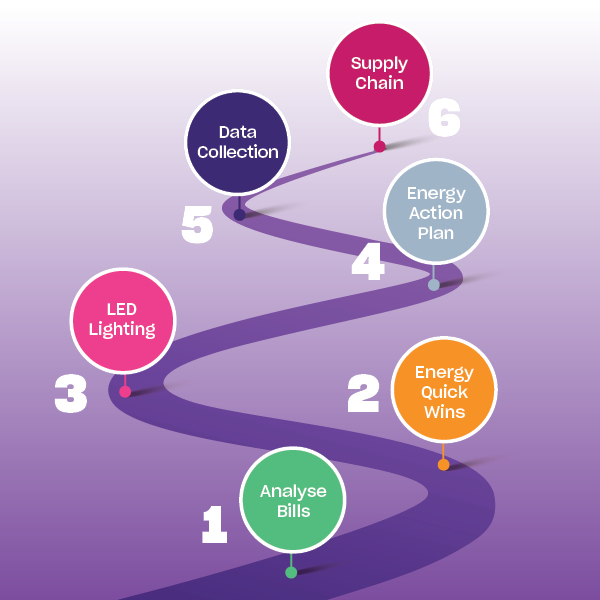
Analyse Energy Bills
Before you can reduce energy consumption you need to understand where it goes. The first practical step is to gather your energy bills from the past year and look for unusual trends. In your premises identify your main energy-using equipment - heating and cooling systems, lighting, IT equipment, refrigeration, catering, and production machinery. Consider when equipment is in use and whether it runs unnecessarily outside of working hours.
Energy Quick Wins
Start with changes that cost little but yield immediate results:
- Implement a ‘switch-off’ policy for equipment not in use and place labels on light switches and controls to guide staff
- Ensure doors and windows aren’t left open when heating or cooling is running
- Switch PC monitors to power-saving mode and ensure equipment is not left on standby overnight
- Keep fridges and freezers away from heat sources
- Use natural ventilation where available rather than mechanical alternatives.
Installing draft excluders around doors and windows can reduce heating costs while smart power strips that prevent phantom energy use often pay back within a year. Installing motion sensors for lighting in low-traffic areas is another practical step.
LED Lighting
Lighting which accounts for a substantial portion of energy consumption in commercial premises. Traditional fluorescent systems not only consume excessive electricity but also require frequent maintenance and replacement. Upgrading to modern LED technology can reduce lighting consumption by up to 70%, directly translating into lower carbon emissions and reduced energy bills.
This is where Energia Lighting Solutions comes in. With our fully funded lighting upgrade scheme businesses can modernise their lighting infrastructure with no initial cost. Instead, the project is financed through the savings generated by the new, more efficient system.
Energia’s energy efficiency support extends beyond lighting. Our Business Energy Efficiency Grants offer post-installation funding for a range of energy conservation measures, including heat pumps, refrigeration systems, and air compressors. This grant can provide funding of up to 20% of project costs, further reducing payback periods and accelerating your return on investment.
Energy Action Plan
An Energy Action Plan sets out the targets you want to achieve and a benchmark against which to measure success. Your plan should include the target or outcome for each objective, the budget required, the person responsible, and a completion date. Display the plan where staff can read it. Visibility keeps everyone aware of what’s being done and why.
When prioritising which projects to tackle first, consider which areas are currently wasting the most energy and the potential cost saving of each measure. Visible improvements such as new LED lighting build staff awareness and buy-in for further action.
Staff who understand why changes are being made and how their own behaviour contributes are far more likely to sustain them. Where specific staff have a significant impact on energy use, targeted training ensures they have the knowledge to operate equipment with energy saving in mind. The SEAI provide free training modules via their online energy academy, specifically targeted at SME employees.
Work through your priority actions according to the timelines you’ve set and at the same time establish an ongoing maintenance programme. When buying new equipment, factor energy consumption into procurement decisions. Procurement is also the right time to review your energy tariff. Contact Energia to confirm you’re on the right tariff for your consumption pattern and to explore green electricity tariffs.
Data Collection
More SMEs are taking a data-led approach to their environmental performance by tracking energy and resource usage and engaging external expertise to understand their carbon footprint. At a governance level, the appointment of a dedicated sustainability officer from within your existing staff can signal that climate action is treated as a strategic business priority rather than a peripheral concern. Track your energy consumption consistently. Common benchmark comparisons include energy use per employee, per unit of floor area, and per unit of revenue.
Supply Chain
The supply chain is also part of your sustainability profile. Start by mapping your key vendors to see if their values align with yours. Communicating your expectations clearly and choosing local suppliers where possible can reduce your carbon footprint while also supporting the local economy. Pursuing accreditations and engaging with awards programmes can also help SMEs build credibility and learn from one another, reinforcing a broader culture of shared accountability on climate.
For many SMEs, taking energy transition seriously means some of your business practices will need to adapt. By sharing these efforts on your website and social media channels you improve your reputation as well as improving the energy efficiency of your business.