.jpg?width=1200&height=500&ext=.jpg)

How does a heat pump work? Your questions answered
Instead of burning fossil fuels like oil or gas, it captures heat from the outside environment, typically using an outside box, and transfers it indoors to keep you warm. This makes heat pumps one of the most sustainable heating systems available today. They are a key technology driving Ireland’s transition to clean energy, helping households cut bills, reduce carbon emissions, and meet the country’s ambitious climate targets.
Understanding heat pump technology
Essentially, a heat pump works like a fridge or air conditioner, but in reverse. While your fridge removes heat from food and expels it into the kitchen, a heat pump extracts thermal energy from the outside environment and moves it into your home. Even when outdoor temperatures fall as low as minus 15 degrees, there’s still available heat in the air that modern heat pumps can capture and transfer indoors.
Types of heat pumps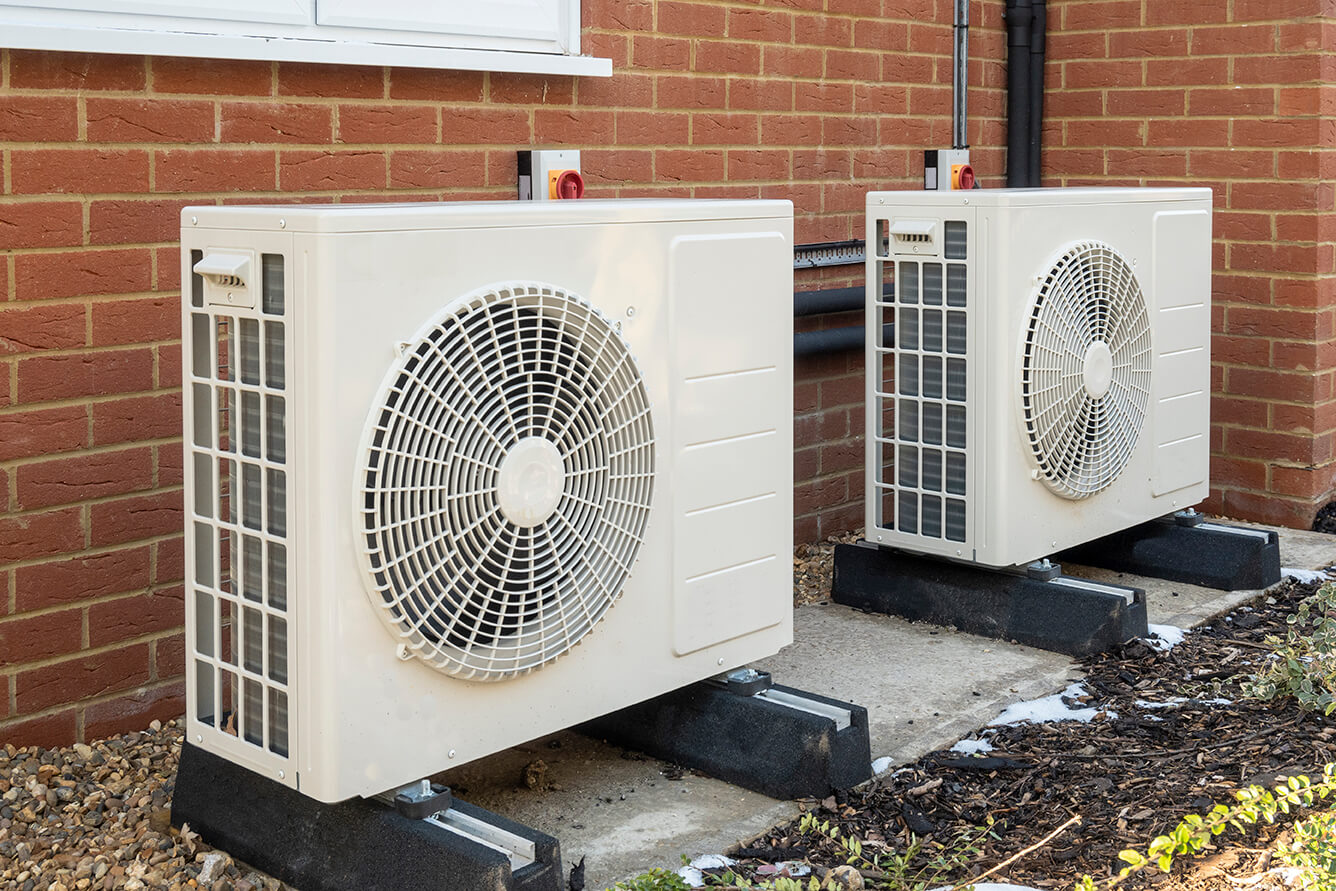
Among the most common and affordable options in Ireland, air source heat pumps draw thermal energy from the outdoor air using an external unit, converting it into heat for your home and hot water. These systems do not require underground piping to source heat.
There are three types of air source heat pumps:
1) Air to water: These are the most common heat pump systems that distribute heat through radiators or underfloor heating. They can also produce hot water.
2) Exhaust-air to water: Similar to air-to-water systems, these heat pumps include mechanical extract ventilation to recover heat from air drawn from the dwelling.
3) Air to air: Heat is distributed through air units, but these systems do not provide hot water.
Ground source heat pumps, while less common, offer superior efficiency by tapping into the earth's stable underground temperatures through pipework and transferred to the heat pump. However, they require more extensive installation work and higher upfront costs.
Water source heat pumps use open water like lakes, rivers or streams as a heat source but provide more consistent performance than air source heat pumps, even in colder climate.
How to use your heat pump efficiently
To get the most out of your heat pump, you need to ensure your house is well insulated and has a high BER rating. Good insulation keeps the warmth inside, helping your heat pump run more efficiently and saving you money in the long run.
Once your system is installed, the best approach is to 'set and forget', which essentially means you can set the thermostat to your preferred comfortable temperature and leave it there. This reduces the need for constant manual adjustments, allowing the system to maintain an even temperature.
If you need an extra boost of heat, try scheduling it during low-rate times to take advantage of cheaper electricity.
It’s also worth checking that you’re on the right energy tariff. Our Smart Day Night tariff is ideal for customers who prefer the 'set and forget' approach. And since heat pumps naturally use more energy during colder months, signing up for Level Pay can help you spread your payments evenly across the year, so you stay warm and comfortable without any surprises when winter bills arrive.
Even better, when paired with renewable energy sources like solar PV panels, your heat pump can provide emissions-free heating for your home.
Four stages of a heat pump 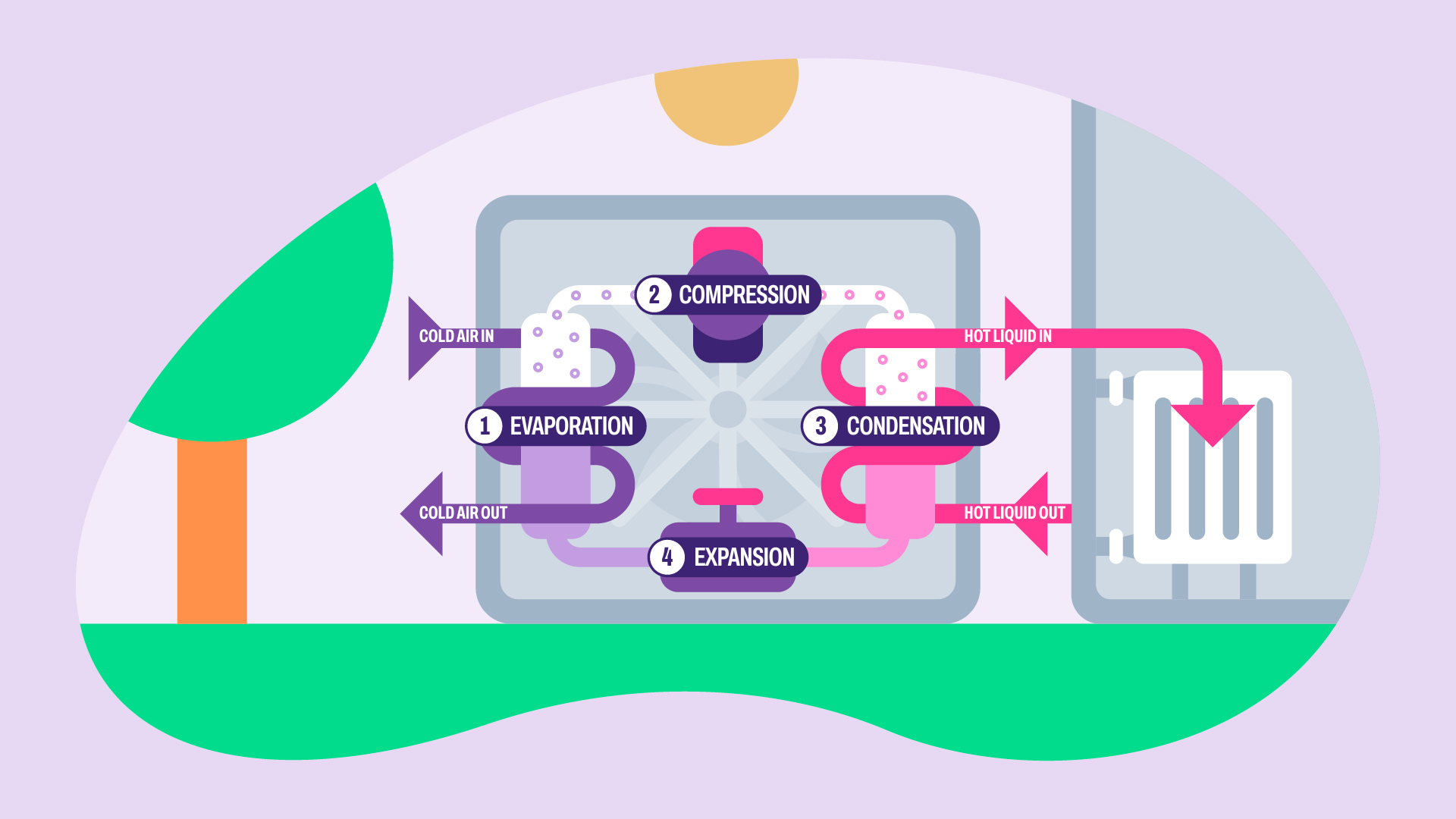
The process begins with a refrigerant, a chemical that absorbs heat from the outside air. This refrigerant travels through four main components: the evaporator, compressor, condenser, and expansion valve.
The evaporator coil, located in an outdoor unit, absorbs heat from the outside air, causing the refrigerant to evaporate into a gas. The compressor then pressurises this gas, which significantly raises its temperature – this is where the heat pump gets its efficiency boost. The hot, pressurised gas then flows to the condenser coil, where it releases its heat to warm your living spaces. Finally, the expansion valve reduces the pressure, allowing the refrigerant to return to its liquid state and restarting the cycle.
Why heat pumps matter for Ireland’s energy targets
Heat pumps are considered as one of the crucial planks in Ireland’s strategy to reduce greenhouse gas emissions from the residential sector, with the target of cutting emissions from 7 MtCO2eq in 2018 to 4 MtCO2eq by 2030.
To help achieve this, the Climate Action Plan sets out a goal of retrofitting the equivalent of 500,000 homes to a Building Energy Rating (BER) of B2, including the installation of 400,000 heat pumps in existing homes to replace older, less efficient heating systems by 2030.
SEAI deep retrofit grants can help eligible homeowners reduce the cost of installing a heat pump as part of a wider home energy upgrade.
Together, these measures support Ireland’s wider national objectives of reducing greenhouse gas emissions by 51% by 2030, relative to 2018 levels, and achieving a climate-neutral economy by 2050.
Essential related reads:
- 6 Energy-Saving Tips for Renters
- A Guide to Solar Panel Grants
- How to understand if your boiler needs servicing
- How to reduce your home energy use
FAQs: Heat pumps
What is a heat pump?
A heat pump is an energy-efficient system that transfers heat from the air, ground, or water to heat your home and provide hot water.
How does a heat pump work in winter?
It extracts heat from outside air, even in freezing temperatures, and transfers it indoors.
Can a heat pump work with radiators?
Yes, heat pumps are typically compatible with radiators.
Do heat pumps use a lot of electricity?
They typically use less than a third of the energy compared to oil and gas boilers.
What is the lifespan of a heat pump?
A well-maintained heat pump lasts around 14–15 years, with some lasting up to 20.